
Need Wooden Pallets Fast? How to Find a Trusted Pallet Supplier in KSA
Finding a reliable wooden pallet supplier in Saudi Arabia sounds simple until your shipment is delayed at customs, your contractor rejects non-compliant packaging, or your order arrives two weeks late from a reseller sitting on stock he bought six months ago. These are not edge cases they are the standard outcome when buyers skip the vetting process and go with the cheapest quote they can find online.
This guide covers what KSA procurement managers, logistics operators, and Aramco contractors actually need to verify before choosing a pallet supplier from compliance requirements and production capacity to local delivery windows across the Eastern Province. Wooden pallets Saudi Arabia sourcing does not have to be a gamble if you know what to ask.
What Makes a Reliable Wooden Pallet Supplier in KSA
The gap between a factory-direct wooden pallet manufacturer in Dammam and a reseller or distributor is wider than most buyers realize going into their first order. On paper, both will quote you a pallet. In practice, only one of them can tell you the exact wood species, moisture content, and production batch of what you are receiving: which matters considerably when that pallet ends up under Aramco contractor cargo or in an export shipment heading to a port that checks ISPM-15 documentation.
Four things separate a serious Saudi Arabia pallet distributor from a middleman with a price sheet:
- Production capacity: Can they handle bulk orders, 500 pallets or 5,000, without splitting your order across multiple batches with inconsistent dimensions?
- Documentation: VAT invoice, CR number, ISPM-15 certificate of treatment, heat treatment stamp. If any of these require three follow-up emails to obtain, that is a red flag before the first delivery.
- Technical support: A pallet manufacturer worth dealing with can advise on load ratings, pallet design for your racking system, and which spec suits your cargo type. If they cannot answer those questions, they are a reseller.
- Response time: Industrial buyers in KSA operate on tight schedules. Same-day quotes and confirmed lead times are a baseline expectation, not a premium service.
When you work directly with a wooden pallet manufacturer in Dammam, the lead time is same-day dispatch for standard sizes. Through a distributor, you are dependent on their stock position, and when that runs short you find out at the worst possible moment.
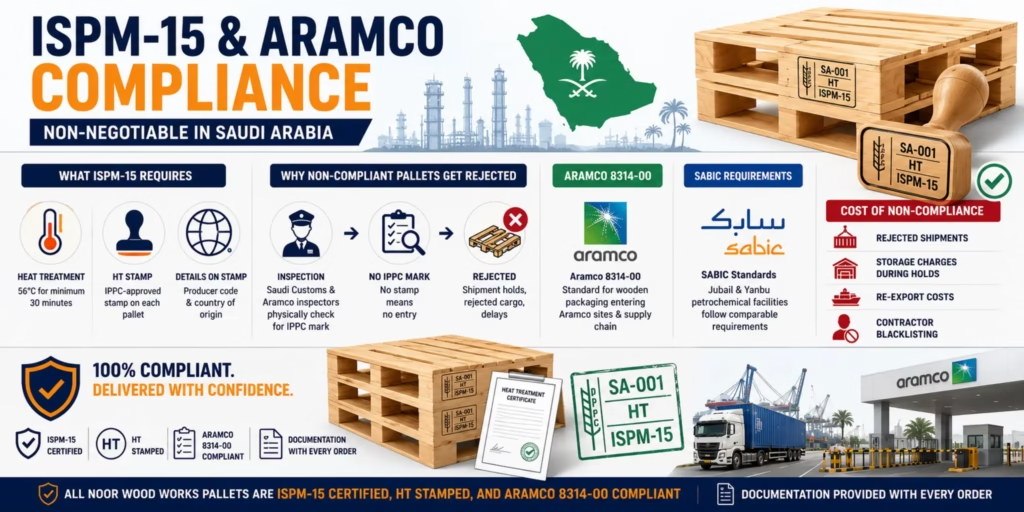
ISPM-15 and Aramco Compliance: Why It Is Non-Negotiable in Saudi Arabia?
This section gets more search traffic from serious buyers than almost any other topic in wooden packaging procurement, and for good reason. ISPM-15 violations at Saudi ports and Aramco gate inspections result in shipment holds, rejected cargo, and in some cases fines that run well above the value of the pallets themselves. Getting this wrong once tends to focus a buyer’s attention very effectively.
Here is what the standard actually requires. ISPM-15 mandates that wood packaging material used in international trade be treated to eliminate pest and disease risk. Heat treatment at 56°C for a minimum of 30 continuous minutes at the wood core is the most widely accepted method. Once treated, the pallet must carry an IPPC-approved HT stamp showing the country of origin, the producer code, and the treatment method. Without that mark, the pallet does not exist as far as most destination port authorities are concerned.
In Saudi Arabia specifically, the stakes go beyond international shipping. Aramco’s 8314-00 standard governs wooden packaging used on its sites and for its contractors. SABIC has comparable requirements for Jubail and Yanbu petrochemical operations. Non-compliant pallets reaching an Aramco gate inspection will be rejected at the point of entry which means your cargo comes back, not just the pallets.
- What ISPM-15 requires: Heat treatment at 56°C for 30 minutes minimum, HT stamp with producer code and country of origin.
- Why non-compliant pallets get rejected: Saudi Customs and Aramco gate inspectors check for the IPPC mark during physical inspection no stamp, no entry.
- Aramco 8314-00 standard: Specifies the wood packaging requirements for all materials entering Aramco-operated sites and contractor supply chains.
- SABIC requirements: Jubail and Yanbu petrochemical facilities operate under comparable standards for wooden packaging entering the site perimeter.
- Cost of non-compliance: Rejected shipments, storage charges during holds, re-export costs, and in repeat cases, loss of contractor approval.
Any pallet supplier you consider in KSA should be able to hand you the heat treatment certification and IPPC stamp documentation before you ask twice. If that paperwork requires chasing, move on.
All Noor Wood Works pallets are ISPM-15 certified, HT stamped, and Aramco 8314-00 compliant documentation provided with every order.
Types of Wooden Pallets Available from KSA Suppliers
Not every pallet does the same job, and buying the wrong configuration for your application creates operational problems that show up later – racking failures, forklift access restrictions, damaged cargo, shipment rejections. Saudi Arabia pallet distributors often quote the cheapest available configuration regardless of what the buyer actually needs. Understanding the basic taxonomy saves that conversation.
Stringer pallets: The most common type in KSA warehouse and construction supply chains. Two-way and four-way entry options available. Standard general warehousing and construction site logistics. Reliable for most non-automated applications.
Block pallets: Four-way entry on all sides, heavier load ratings, better suited for automated systems and international shipping lanes where forklift approach direction cannot be controlled.
Euro pallets (EPAL 1200×800): Certified for European trade lanes. Pharma, retail, and FMCG export buyers who ship into EU distribution networks need these specifically – a standard stringer pallet will not pass EPAL inspection.
Chemical pallets CP1-CP9: The CP classification system governs pallets used in petrochemical and chemical cargo transport. CP1 through CP9 designations define load capacity, deck board configuration, and entry type. Jubail and Yanbu petrochemical operations run on these. Stringer pallets Saudi Arabia suppliers often cannot provide the correct CP designation – confirm before ordering.
Custom pallets: Oversized skids for oil and gas equipment, non-standard dimensions for machinery crating, CAD-engineered designs for specific cargo geometries. A factory-direct manufacturer can produce these from drawings. A reseller cannot.
Four-way entry pallets: Forklift access on all four sides. Essential for high-volume logistics operations where turnaround speed matters and approach direction varies.
Nestable pallets: Space-saving configuration for retail and FMCG distribution where return logistics and storage density matter.
Pallets for Warehousing vs Export: Choosing the Right Specification
Two buyers can both need wooden pallets for Saudi Arabia operations and require completely different specifications depending on where that pallet ends up. Getting the spec right upfront avoids a replacement order later.
What Warehousing Buyers Need:
- Load rating matched to the racking system: a 1,500kg dynamic load rating pallet in a racking system engineered for 1,000kg is a structural risk.
- Standard KSA and Middle East dimensions: 1200×1000mm is the regional standard for most WMS-integrated operations.Consistent dimensions across the full batch: automated systems tolerate very little variance. Mixed-batch pallets from resellers routinely cause conveyor jams.
- Durability for multiple use cycles: reusable pallet programmes need hardwood or high-density softwood construction, not the cheapest available timber.
What Export Buyers Need?
- ISPM-15 certification: mandatory for every international shipment. Non-negotiable.
- Moisture-resistant construction: sea freight containers accumulate condensation over long voyages. Pallets that absorb moisture compromise the cargo above them.
- Consistent dimensions across the full batch: automated systems tolerate very little variance. Mixed-batch pallets from resellers routinely cause conveyor jams.
- Durability for multiple use cycles: reusable pallet programmes need hardwood or high-density softwood construction, not the cheapest available timber.
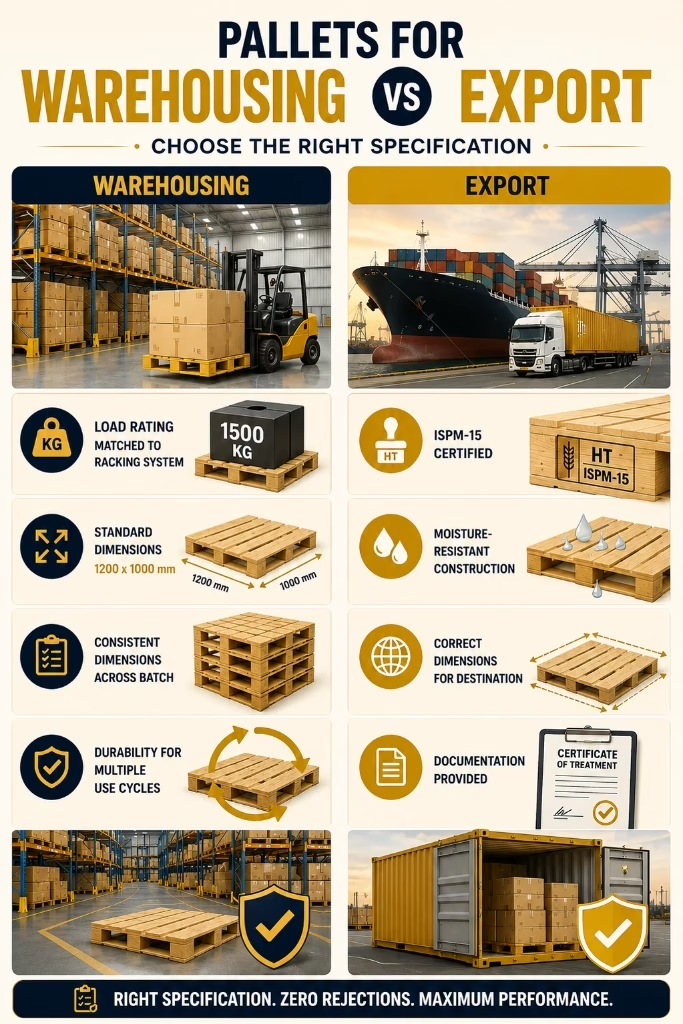
Whether you need pallets for internal KSA warehousing or certified export pallets from Saudi Arabia, getting the specification confirmed at the quote stage eliminates the costly replacement orders and shipment rejections that happen when buyers assume the supplier knows what they need.
Pallet Delivery Across the Eastern Province What to Expect
Delivery lead time is where the factory-direct versus reseller difference becomes immediately visible. A manufacturer based in Dammam can dispatch the same day for standard-size orders because the production line and the dispatch yard are the same facility. A reseller in Riyadh is calling his supplier in Dammam and adding his margin and his lead time on top of theirs.
Realistic delivery windows from a Dammam-based wooden pallet supplier:
- Dammam and Khobar: Same-day dispatch, same-day or next-morning delivery for most industrial areas.
- Jubail Industrial City: Same-day or next-day, approximately 80km from Dammam, straightforward logistics corridor.
- Riyadh: 24 to 48 hours depending on order volume and route scheduling.
- Yanbu and Jeddah: 24 to 48 hours, confirm with the supplier for large or urgent orders.
- Bahrain: 24 to 48 hours, cross-border documentation required, confirm in advance.
Minimum order quantities vary by supplier. Factory-direct manufacturers generally offer more flexibility on MOQ than distributors, who often have fixed case minimums tied to their own purchasing commitments. For bulk orders, full truckload quantities or ongoing supply contracts, same-day dispatch from a factory with stockpile capacity is achievable. Ask specifically whether the supplier maintains finished goods inventory or produces to order, because that distinction determines your actual lead time when you place an urgent request.
Fast pallet delivery to Jubail, Khobar, Dammam, and Riyadh, call +966 580 611 809 or WhatsApp for a same-day quote.
Questions to Ask Before Choosing a Wooden Pallet Supplier in Saudi Arabia
Most suppliers will tell you they can handle whatever you need. These eight questions separate the ones who can from the ones who are about to find out on your timeline:
- Are your pallets ISPM-15 certified and HT stamped? Ask to see a sample certificate before placing the order, not after.
- Do you manufacture to Aramco 8314-00 and SABIC standards? If the answer requires a pause, that is your answer.
- Can you supply custom sizes based on CAD drawings? A factory can say yes immediately. A reseller will need to check with someone.
- What is your production capacity for bulk orders? You want a specific number pallets per day not a general assurance.
- What is your delivery lead time to Jubail, Dammam, and Riyadh? Same-day from Dammam to Jubail is achievable. Anything longer from a supposedly local supplier warrants a follow-up question about where they actually produce.
- Do you provide a VAT invoice and compliance documentation with every delivery? This should be standard. If it requires a separate request, factor in that administrative overhead across your entire order volume.
- What wood species and moisture content do you use? Kiln-dried timber with moisture below 19% is the benchmark for export and Aramco compliance. Cheap, undried green wood will give you a warping problem a few weeks later.
- Can you quote within the same day? Industrial procurement moves fast. A supplier who needs 48 hours just to generate a price sheet is telling you everything you need to know about their operational speed.
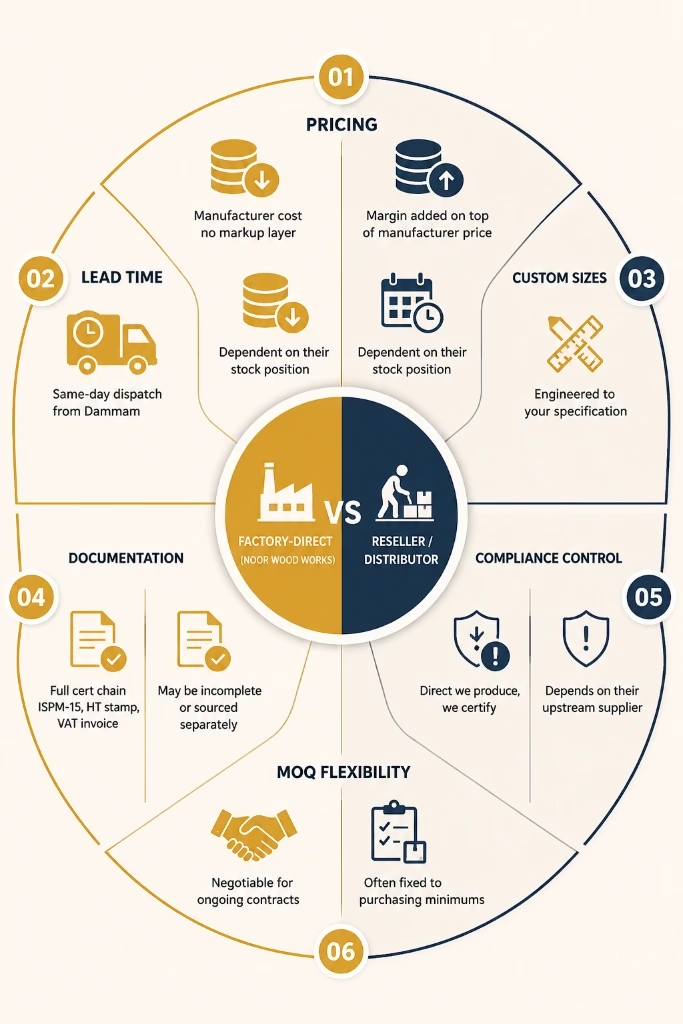
Why KSA Industries Choose Noor Wood Works?
Here is the factual version, without the marketing:
- Factory located in Dammam: Eastern Province’s fastest delivery corridor to Jubail Industrial City, Khobar, and Riyadh. No distributor layer, no relay logistics.
- ISPM-15 certified, Aramco 8314-00 and SABIC compliant: full documentation provided with every order. HT stamp, certificate of treatment, VAT invoice, CR number.
- Premium kiln-dried Austrian and Finnish Spruce: moisture content controlled, consistent batch-to-batch dimensions, suitable for both automated racking systems and export freight.
- Custom sizes from CAD drawings: oversized skids for oil and gas components, non-standard crate dimensions for machinery, project-specific configurations for petrochemical cargo.
- Same-day quotes via WhatsApp: procurement teams do not have time for a three-day quote cycle. Call or message and get a number the same day.
- Bulk and small batch orders: no fixed minimum. Whether you need 50 pallets for a one-time project or 5,000 on a rolling monthly contract, the production capacity is there.
Industrial buyers across the Eastern Province, warehousing operators, Aramco and SABIC contractors, export freight companies, and construction logistics teams, come back because the compliance documentation is always in order and the pallets arrive when promised. That record matters more than a low quote from a supplier you have never dealt with before.
Conclusion
Choosing the right wooden pallet supplier in Saudi Arabia comes down to three things, compliance certification, delivery speed, and factory-direct pricing. For procurement managers and logistics operators across the Eastern Province, working with a Dammam-based manufacturer eliminates reseller delays and ensures every pallet meets Aramco, SABIC, and ISPM-15 requirements before it reaches your site.
The difference between a smooth supply chain and a rejected shipment at an Aramco gate is usually not the pallet itself – it is whether the right documentation came with it and whether the supplier who produced it knew what they were making. Those two things are easier to verify before the order than after it.
Ready to order? Call +966 580 611 809 or WhatsApp for a same-day quote. Noor Wood Works delivers wooden pallets to Jubail, Khobar, Dammam, Riyadh, and Bahrain, factory direct.