
How the Right Wooden Crate Delivers Complete Fragile Cargo Protection
At Saudi Arabia’s ports, the stakes for fragile cargo protection have never been higher. Every broken component, damaged machinery piece, or shattered equipment represents not just financial loss, but operational delays, reputation damage, and strained client relationships.
This comprehensive guide explores how wooden crates prevent damage, examining shipping crate protection strategies and wooden crate engineering principles. These critical elements that transform standard boxes into fortress-level protection systems. Following is understanding crate cushioning techniques, vibration protection packaging, and moisture-resistant wooden crates separates successful shipments from costly disasters.
1. The True Cost of Inadequate Industrial Packaging
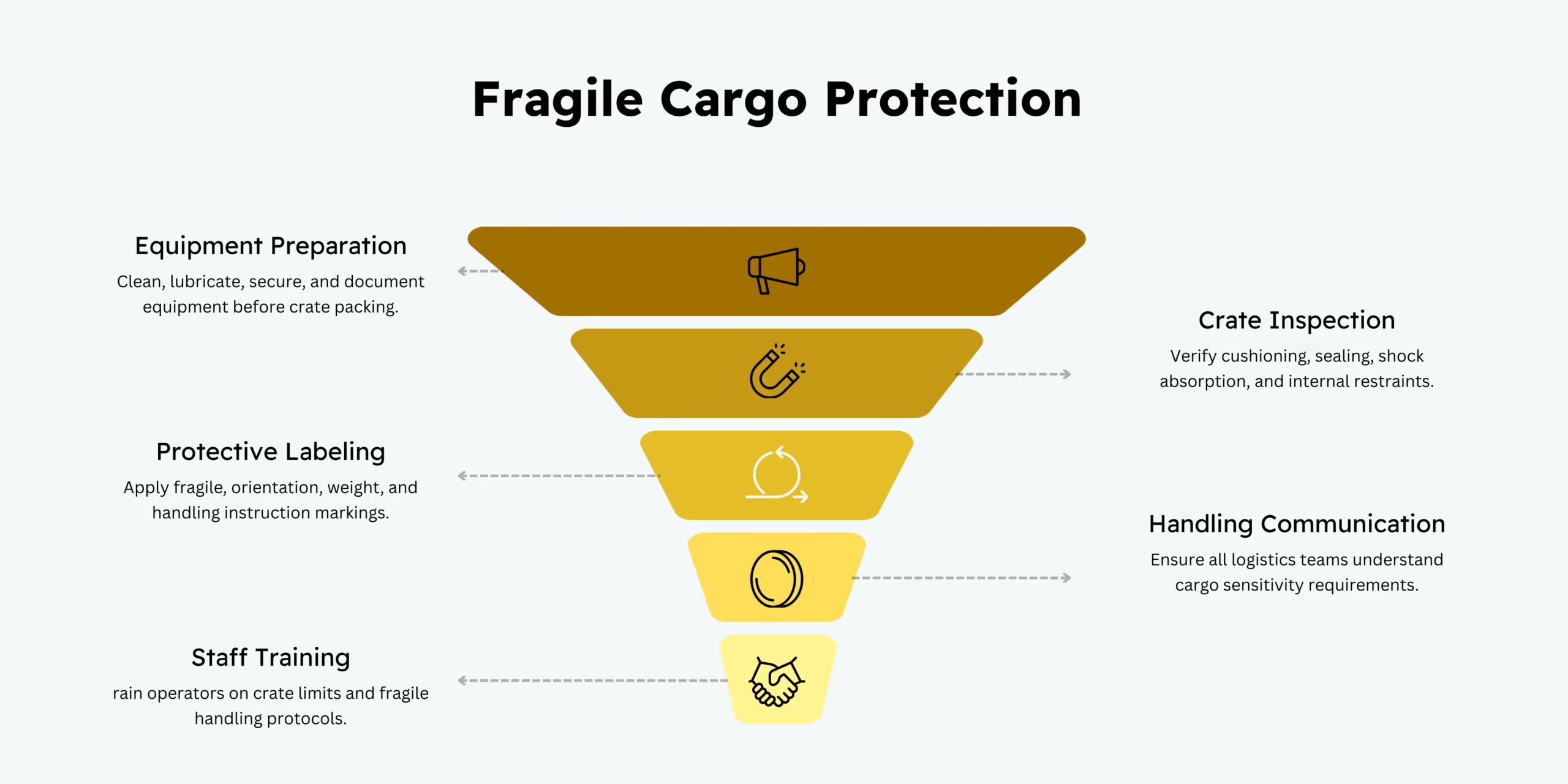
The financial consequences of structural packaging failures extend far deeper than the initial cost of replacing the wood. Saudi enterprises face severe compounding losses when standard enclosures fail:
- Production Line Downtime: A single broken precision instrument can halt operations at an industrial site, costing hundreds of thousands of Saudi Riyals (SAR) for every day a facility remains offline.
- Supply Chain Disruption: Replacing specialized components mid-transit cascades through schedules, missing critical installation windows across mega-projects.
- Insurance and Legal Overhead: Repeated transit damage claims drive up annual corporate insurance premiums by 10% to 30% and risk ongoing legal disputes.
2. Advanced Internal Cushioning Techniques for Sensitive Equipment
Internal crate isolation has evolved past standard foam padding into multi-layered shock and vibration protection systems engineered to protect high-value corporate assets. High-performing protective setups utilize a strict three-tiered defense architecture:
I. Primary Shock Absorption (Direct Product Contact)
This layer features precision, custom-molded high-density polyethylene foam (2-6 lbs/ft³ density) cut to match the exact physical contours of your equipment. This structural modeling achieves an immediate 80% to 90% shock reduction during sudden impacts or drops.
II. Secondary Vibration Isolation (Mid-Layer)
Using specialized rubberized padding and dampening materials, this layer neutralizes continuous, low-frequency vibrations during long-distance road transport or ocean transit, preventing mechanical fatigue in internal electronics.
III. Tertiary Structural Support (Load Distribution)
Integrated internal timber bracing prevents lateral cargo shifting, utilizing engineered suspension cradles to completely isolate hyper-sensitive medical imaging or laboratory calibration devices from the external walls of the wooden crate.
3. Engineering for Harsh Transportation Stresses
To design an effective impact-resistant enclosure, our engineering teams build specifically against the physical G-forces and environmental threats cargo encounters across major Saudi transit channels:
| Transit Mode / Hazard | Primary Operational Threat | Typical G-Force Impact |
|---|---|---|
| Road Transport (KSA Highways) | Continuous road vibration, potholes, speed braking | 2 – 8 G (Continuous) |
| Forklift & Crane Handling | Sudden terminal drops, sharp acceleration jolts | 10 – 30 G (Per movement) |
| Container Loading / Port Stacking | Shifting during terminal shunting, side collisions | 5 – 15 G (Per load cycle) |
| Ocean Freight (Export Lanes) | Rolling, pitching, structural pressure from heavy sea swells | 1 – 4 G (Wave-dependent) |
Mitigating the Saudi Climate Perimeter
Beyond physical impacts, the extreme coastal humidity of Dammam, Jubail, and Jeddah combined with harsh inland temperature swings can easily damage unshielded metals and electronics. To secure your perimeter, Noor Wood Works integrates military-grade environmental protections directly into our heavy-duty wooden crates:
- VCI (Vapor Corrosion Inhibitor) Film Barriers: Wraps around internal metal components to completely eliminate rust and oxidation risks during sea transit.
- Industrial-Grade Desiccants: Scaled moisture-absorption packs (ranging from 500g to 2,000g based on volume calculations) placed inside a heat-sealed 6-mil polyethylene waterproof liner to eliminate internal condensation.
- Strict Kiln-Dried Lumber Standards: We utilize premium timber strictly dried to a controlled 12-18% moisture content threshold, preventing structural warping, splitting, or mold growth during long storage windows at customs terminals.
4. Specialized Designs for Sensitive Equipment
Crate design for sensitive equipment varies dramatically by industry sector. Saudi Arabia’s diversifying economy demands specialized industrial packaging approaches to safeguard highly distinct asset classes:
- Medical Equipment & Healthcare Devices: For hyper-sensitive imaging frameworks (MRI and CT scanners), we design custom suspended frames, climate-controlled interiors, and specialized anti-vibration rubberized mounts.
- Electronics & Telecommunications: Data center servers and semiconductor equipment require advanced anti-static packaging shields, maximum internal shock isolation, and custom engineered humidity barriers.
- Oil & Gas Equipment (Aramco Projects): Heavy industrial oilfield machinery requires maximum corrosion protection, rugged weatherproofing, and structural configurations that easily pass strict gate safety inspections.
5. Export Crate Standards and Regulatory Compliance
International Shipping Requirements
Export crate standards governing international shipments protect global ecosystems while ensuring cargo safety. Key regulations affecting Saudi exporters:
ISPM-15 Phytosanitary Standards:
- Mandatory heat treatment (56°C core temperature for 30+ minutes)
- Complete debarking requirements
- Official IPPC stamp marking (country code SA, facility registration, treatment method HT)
- Documentation: Phytosanitary certificates, treatment verification
- Accepted in 180+ countries, including the EU, USA, China, Australia, and GCC nations
Military and Aerospace Standards:
- MIL-STD-2073: Military Standardized crate packaging procedures for defense applications
- MIL-STD-810: Environmental engineering considerations
- AS9100: Aerospace quality management requirements
Industry-Specific Certifications:
- UN Dangerous Goods: Packaging for hazardous materials
- IATA Dangerous Goods Regulations: Air cargo compliance
- IMO (International Maritime Organization): Sea freight regulations
Noor Wood Works maintains certifications ensuring every crate meets export packaging safety methods. This is required for seamless customs clearance across Saudi Arabia’s expanding trade networks.
6. Testing and Validation: Ensuring Protection Performance
Industrial Crate Performance Testing
Professional wooden crate safety verification employs rigorous testing protocols simulating real-world conditions:
ISTA Testing Procedures:
1 Series (Non-simulation integrity testing):
- Drop tests from predetermined heights
- Compression testing (stacking simulation)
- Vibration testing at standardized frequencies
- Suitable for general industrial applications
2 Series (Partial simulation testing):
- Replicates specific distribution environments
- Concentrated impact tests
- Random vibration profiles
- Temperature and humidity cycling
3 Series (General simulation testing):
- Complete distribution cycle simulation
- LTL (less-than-truckload) and truckload profiles
- Multiple handling and transportation modes
- Industry standard for fragile cargo handling guidelines
4 Series (Enhanced simulation testing):
- Customer-specific supply chain replication
- Extended transit scenarios
- International shipping validation
- Premium testing for high-value equipment
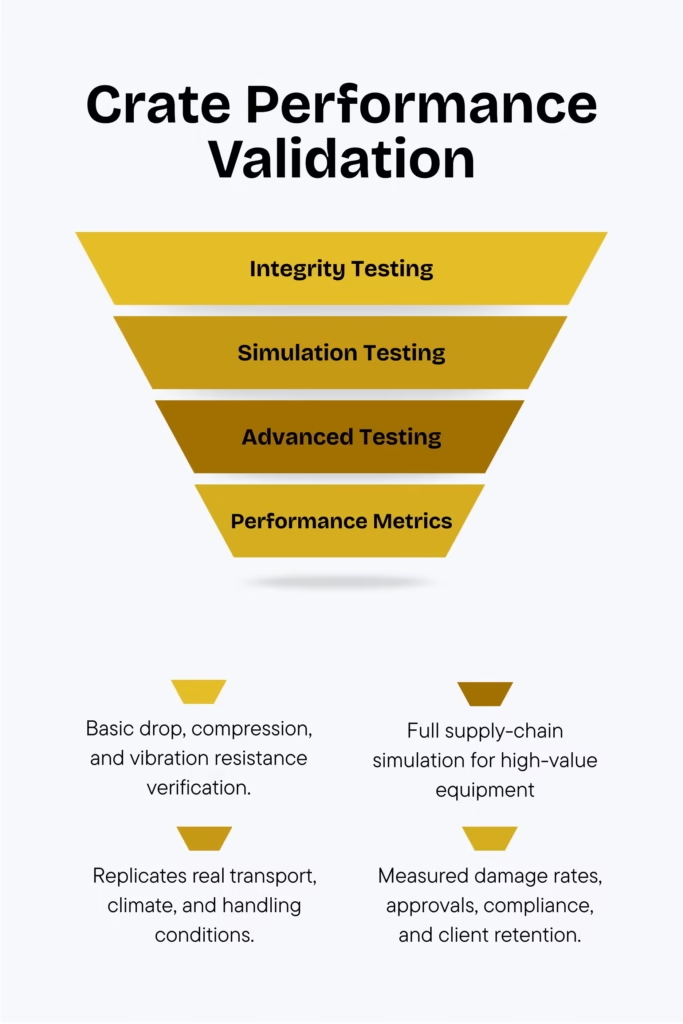
Real-World Performance Metrics
Noor Wood Works tracks crate performance across actual shipments:
Key Performance Indicators:
- Damage rate: Target <0.5% (industry standard 2-11%)
- Customer satisfaction: 98%+ approval ratings
- Customs acceptance: 100% first-time clearance (ISPM-15 compliance)
- Repeat business: 85% client retention, demonstrating confidence in protective wooden packaging
Saudi Arabia’s increasingly demanding quantifiable protection performance. Businesses shipping through the Kingdom’s expanding infrastructure require verification that wooden crate structural strength meets documented standards.
8. Cost-Benefit Analysis: Investment in Quality Protection
True Cost of Cheap Packaging
Businesses often underestimate the total cost difference between adequate and inadequate fragile cargo protection:
Scenario Comparison (Based on USD 100,000 equipment shipment):
| Factor | Standard Packaging | Engineered Wooden Crate | Difference |
| Initial Packaging Cost | SAR 3,000 | SAR 8,500 | +SAR 5,500 |
| Damage Risk | 8-12% | <1% | -11% |
| Expected Damage Cost | SAR 30,000-45,000 | SAR 3,000 | -SAR 27,000-42,000 |
| Insurance Premium | 2.5% of cargo value | 1.2% of cargo value | -SAR 4,875 |
| Reshipping Costs (if damaged) | SAR 18,000 | SAR 0 | -SAR 18,000 |
| Total Expected Cost | SAR 54,000-69,375 | SAR 12,575 | -SAR 41,425-56,800 |
ROI Analysis: Every riyal invested in professional wooden crate design returns 5-10x value through damage prevention, insurance savings, and reputation protection.
Long-Term Strategic Value
Beyond immediate cost savings and quality protective wooden packaging delivers strategic advantages:
Competitive Differentiation:
- Builds a reputation for reliability in Saudi Arabia’s competitive markets
- Attracts premium clients requiring guaranteed industrial cargo protection
- Enables expansion into high-value equipment sectors (medical, aerospace, precision manufacturing)
Operational Efficiency:
- Reduces time spent managing damage claims and customer complaints.
- Streamlines insurance processes with documented protection protocols.
- Supports Vision 2030 logistics transformation through world-class practices.
Risk Mitigation:
- Protects against catastrophic single-event losses.
- Maintains operational continuity, preventing production delays.
- Safeguards company’s reputation in industries where trust equals business.
8. Noor Wood Works: Engineering Protection Excellence in Saudi Arabia
Comprehensive Wooden Crate Solutions
Noor Wood Works stands as the Kingdom’s trusted partner for protective wooden packaging. We serve Jubail’s manufacturing centers, Al Khobar’s port facilities, and Dammam’s industrial complexes.
Our Engineering Capabilities:
Design Services:
- CAD-based custom crate engineering
- Load analysis and stress calculations
- Material optimization balancing protection and cost
- Compliance verification (ISPM-15, ISTA, industry-specific standards)
Manufacturing Excellence:
- Climate-controlled production facilities
- Precision cutting and assembly equipment
- Quality control at every production stage
- ISO 9001 certified processes
Protection Technologies:
- Multi-layer cushioning systems
- Advanced vibration protection packaging
- Moisture-resistant wooden crates for the Saudi climate
- Custom suspension mounts for ultra-sensitive equipment
Materials & Treatments:
- Group I and II woods selected for application requirements
- ISPM-15 certified heat treatment (56°C core temperature)
- Water-repellent coatings and moisture barriers
- Food-grade and pharmaceutical-compliant options
Industries Served
Noor Wood Works provides specialized wooden crates for heavy equipment and fragile cargo across:
- Oil & Gas: ARAMCO projects, petrochemical equipment, drilling components
- Manufacturing: CNC machines, robotics, production line equipment
- Healthcare: Medical imaging, laboratory instruments, pharmaceutical products
- Electronics: Telecommunications infrastructure, data center equipment, semiconductors
- Aerospace: Aircraft components, satellite systems, precision instruments
- Construction: Heavy machinery, specialized tools, high-value building equipment
- Automotive: Engine assemblies, testing equipment, manufacturing systems
9. Fragile Cargo Handling Guidelines: Best Practices
Pre-Shipment Preparation
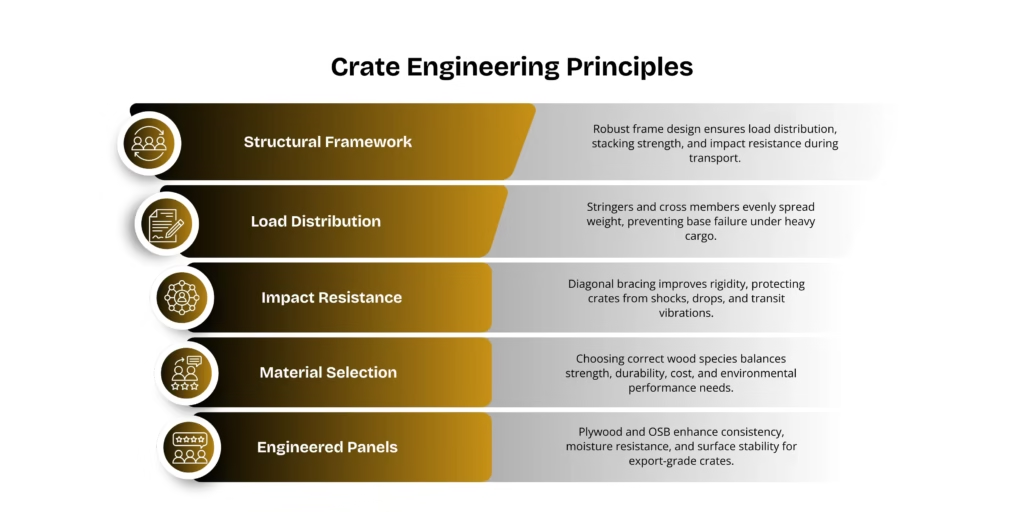
Effective fragile cargo protection extends beyond crate quality to comprehensive handling protocols:
Equipment Preparation:
- Cleaning: Remove contaminants preventing corrosion during transit
- Lubrication: Apply protective coatings to moving parts
- Securing: Remove or secure all loose components
- Documentation: Photograph the equipment condition for insurance purposes
- Calibration records: Document settings requiring restoration after shipping
Crate Assembly Supervision:
- Verify crate cushioning techniques match equipment fragility
- Inspect the shock absorption in crates placement and condition
- Confirm moisture resistant wooden crate barriers are sealed
- Test internal securing mechanisms preventing movement
- Validate labeling (fragile warnings, orientation arrows, weight specifications)
Transportation and Handling Instructions
Clear communication ensures everyone in the logistics chain understands protection requirements:
Critical Labeling:
- Fragile warnings: High-visibility markings on all six crate faces
- Orientation indicators: “This side up” preventing inverted handling
- Weight specifications: Preventing overloading and handling equipment selection
- Center of gravity marks: Guiding forklift and crane operators
- Special instructions: Climate control requirements, stacking limitations, maximum tilt angles
Handler Training & Operational Protocols:
- Structural Awareness: Ensure forklift operators completely understand the load bearing limits and structural design of the crate.
- Indicator Recognition: Train warehouse teams to instantly identify and respect fragile cargo markings, orientation arrows, and anti-tilt indicators.
- Logistics Coordination: Ensure dispatch teams select specialized transport vehicles equipped with proper air-ride suspension systems for sensitive cargo cross-country routes.
10. Future Trends in Protective Wooden Packaging
Technology Integration
Wooden crate design evolution incorporates modern technologies:
IoT Sensors:
- Real-time shock and vibration monitoring
- Temperature and humidity logging
- Location tracking throughout supply chains
- Immediate alerts when handling exceeds safe thresholds
Smart Materials:
- Color-changing indicators revealing excessive g-forces
- Moisture-sensitive labels showing humidity exposure
- Temperature strips documenting climate excursions
- Providing evidence for insurance claims and continuous improvement
Data Analytics:
- Aggregating protection performance across shipments
- Identifying weak points in distribution networks
- Optimizing crate designs based on actual stress data
- Predicting maintenance requirements for reusable crates
Sustainability Initiatives
Aligning with Saudi Arabia’s environmental goals:
- FSC-certified wood: Sustainably sourced timber supporting forest management
- Recyclable designs: Crates engineered for disassembly and material recovery
- Reduced material use: Optimization reducing wood consumption 15-25% without compromising protection
- Reusable systems: Heavy-duty crates lasting 10+ cycles for closed-loop operations
Take Action: Protect Your Fragile Cargo Investment Today
How wooden crates prevent damage isn’t magic. It’s science, engineering, and meticulous attention to detail. From wooden crate structural strength calculated for specific loads to crate cushioning techniques isolating fragile components. Noor Wood Works combines 25+ years of packaging expertise with a deep understanding of Saudi Arabia’s logistics landscape. Our wooden crate engineering transforms vulnerability into confidence, ensuring your most critical equipment arrives exactly as intended.
Don’t gamble with fragile equipment worth hundreds of thousands or millions of riyals. Partner with Saudi Arabia’s protective wooden packaging specialists who understand that your cargo’s safety directly impacts your business success.
Noor Wood Works offers:
- Free Packaging Engineering Consultation: Our experts evaluate your equipment and recommend optimal protection strategies
- Custom Crate Design Services: CAD-based engineering ensuring perfect fit and maximum protection
- ISPM-15 Export Certification: Complete compliance documentation for seamless international shipping
- Testing & Validation: Performance verification providing peace of mind
- Nationwide Saudi Arabia Service: Supporting operations in Riyadh, Jeddah, Dammam, Jubail, Al Khobar, and throughout the Kingdom
Our engineering team will analyze your equipment, evaluate transportation risks, and design custom protective wooden packaging. We ensure your fragile cargo arrives safely; every single time.
Because when failure isn’t an option, engineering excellence is the only choice.